Research
Projects and papers, newest first. Each one opens a short summary with a figure, the main results and links.
Projects and papers
-
Reinforcement learning for a 744B-parameter agent
End-to-end GRPO training across 8-node GPU clusters, with the production agent as the environment. WRITER, 2025 to 2026 -
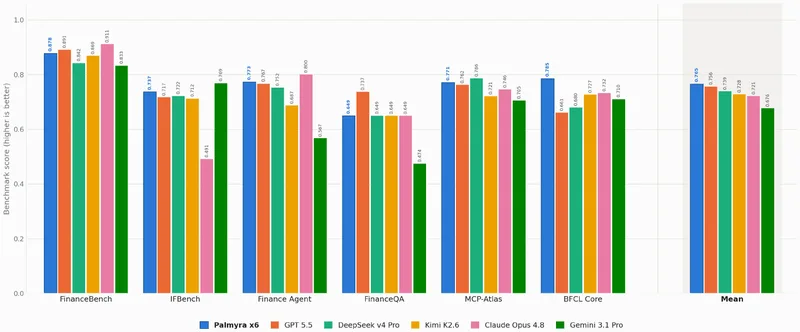
Palmyra x6: an agentic, tool-use model
WRITER's shipped agentic model, post-trained on data from a synthetic tool-use pipeline I built. It has the top BFCL Core score (0.785) among the compared models. Technical report, arXiv 2026 -
Denoising Blocks, Not Tokens: Efficient Compressed Continuous Diffusion with Branching Token Realization
Under review at ICLR 2027 -
When Are Errors Evidence? Deciding Whether to Revise, What to Keep, and How to Commit in Diffusion Language Models
Under review at ACL ARR October 2026 -
Self-evolving agentic AI systems
Agents that learn from their own mistakes, through planning with tree search, self-correction and continual fine-tuning. WRITER, 2025 -
Differential Transformer with low-rank adapters
Making the differential Transformer cheaper to train and better at long context, with low-rank adapters and hyper-attention. WRITER, 2025 -
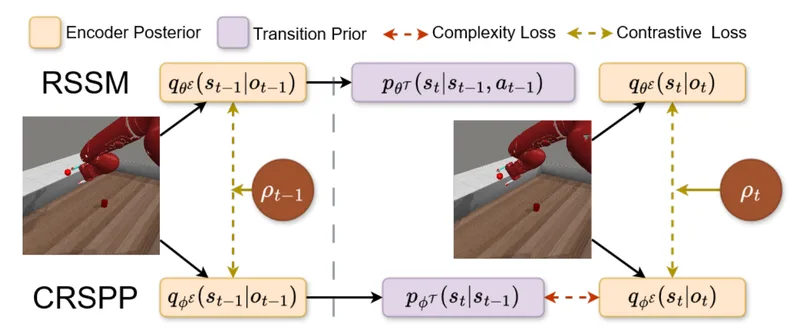
SR-AIF: sparse-reward robotics from pixels
An active inference agent that learns its own goal states, solving sparse-reward robot manipulation from camera images. ICRA 2025 -
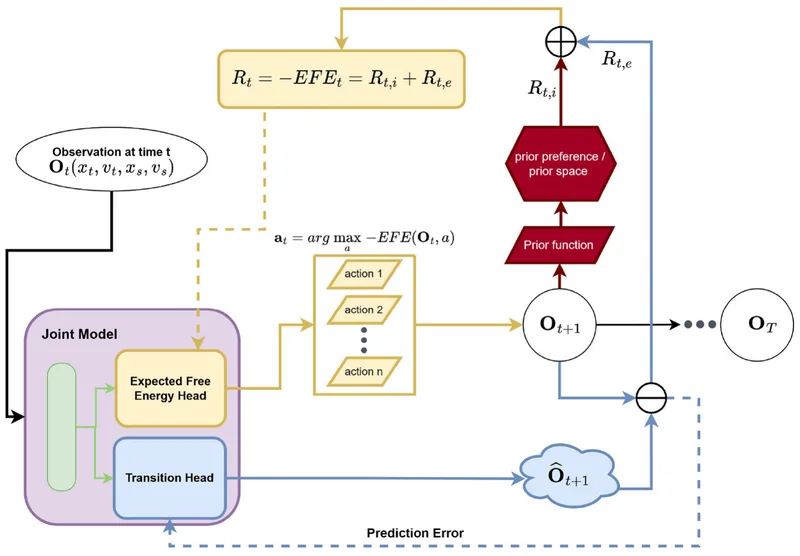
A neural active inference model of perceptual-motor learning
A neural active inference agent learns to intercept a target that changes speed and, like people do, speeds up early in anticipation of the change. Frontiers in Computational Neuroscience, 2023 -
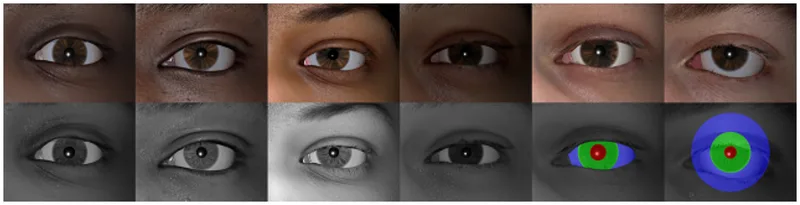
RIT-Eyes
A Blender platform that renders labeled near-eye images from a detailed eye model, for training eye segmentation networks and testing how they generalize. ACM SAP 2020 -
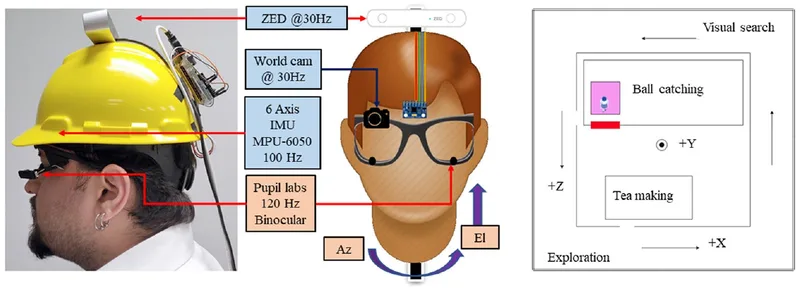
Gaze-in-Wild
A labeled dataset of eye and head movements during everyday tasks, with baseline classifiers for fixations, pursuits and saccades while the head moves freely. Scientific Reports, 2020 -
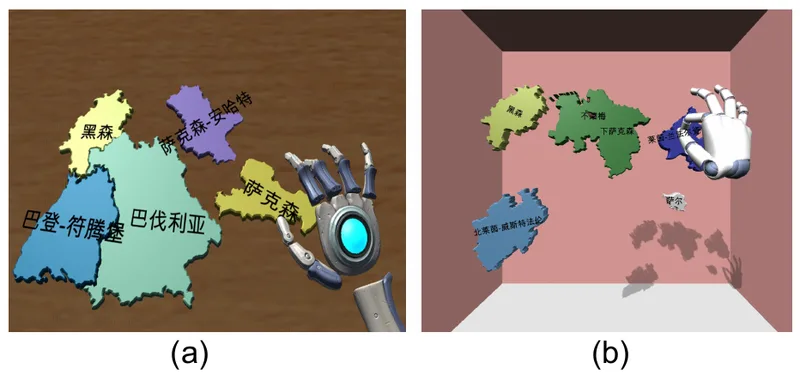
Passive haptics based mixed reality system
A mixed reality system in which people handle real, tracked objects with bare hands while seeing virtual counterparts, calibrated for accuracy and tested for teaching geography. ISMAR 2016 and VRCAI 2016